
CPQ for Manufacturing: The 2026 Guide to Software and Fit
What manufacturing CPQ software must do, configuration, CAD automation, ERP integration, plus how the top vendors compare. From working CPQ consultants.

What is CPQ for manufacturing, exactly?
Generic CPQ handles commercial complexity: bundles, discount tiers, approval chains, subscription terms. Manufacturing CPQ has to handle that plus a harder problem, physical validity. When a customer picks a longer boom on a crane, or a heavier battery pack on a truck, that choice cascades into structural, weight, and compliance consequences elsewhere in the product. A manufacturing CPQ model has to know this before the quote goes out, not after an engineer catches it in production.
That is why we generally recommend constraint-based configuration over the if-then rule scripts that work fine for a software subscription quote. A constraint solver models what is physically true about your product and lets the sales conversation move freely inside those limits, instead of a developer maintaining thousands of brittle "if X then hide Y" statements as the catalogue grows. If you want the fundamentals first, start with what CPQ actually is, this guide assumes you already know the basics and want the manufacturing-specific version. (Läser du hellre på svenska? Vad är CPQ?)
Why manufacturers need CPQ: benefits with real numbers
The generic CPQ pitch, faster quotes, fewer errors, undersells what happens in an engineered-product business specifically:
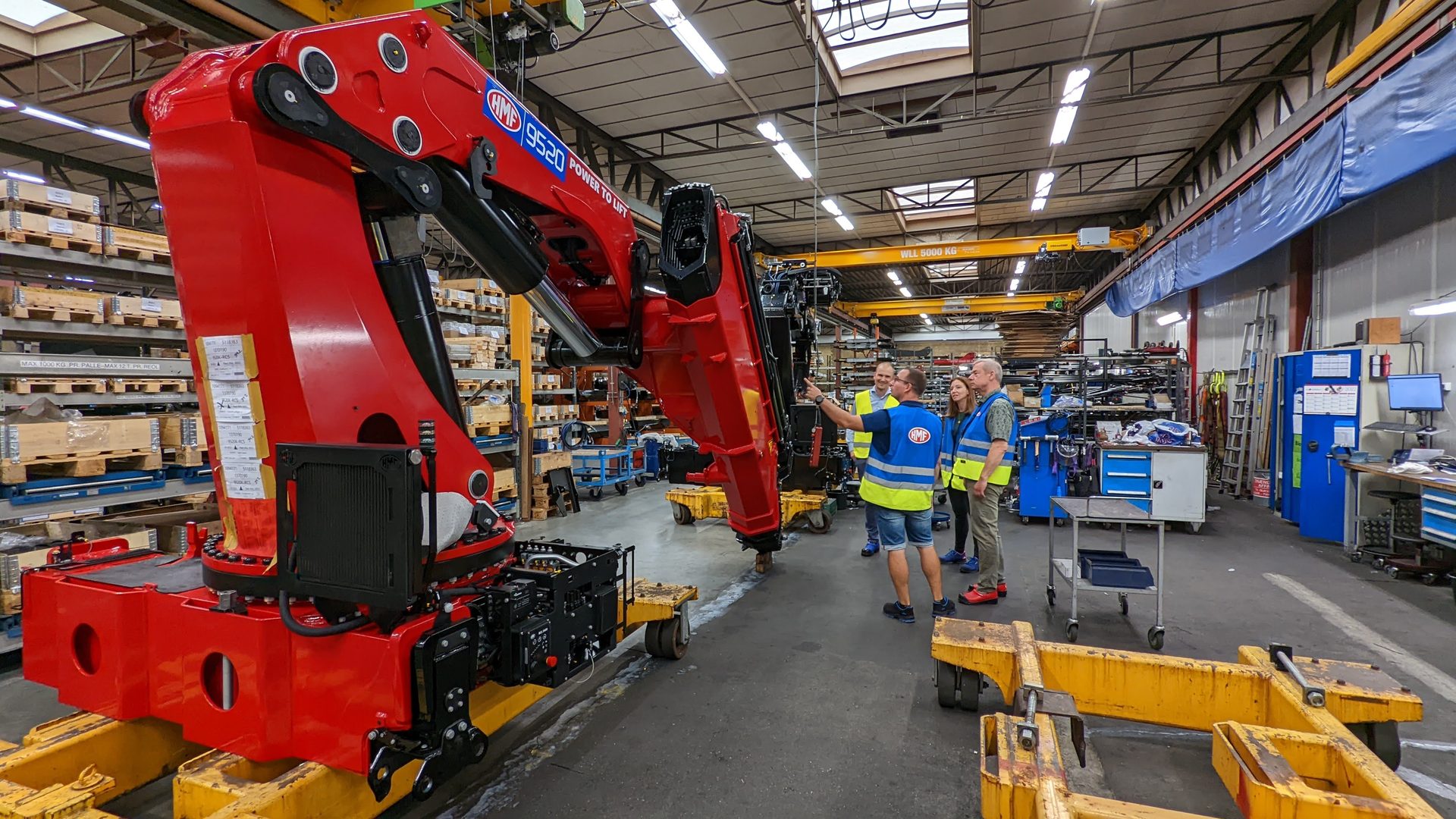
- Every order arrives correct. Our customer HMF Cranes has distributors in 35 countries configuring and quoting truck-mounted cranes in Tacton CPQ, in their own language, from one product model, and what they offer is always a crane HMF can build. Read the HMF Cranes story.
- One model replaces the order-taking department. SWIFT Home Lifts used to turn emails, calls and PDF templates into quotes by hand. One CPQ model now does it, one place to maintain product logic instead of many places to get it wrong. See the SWIFT story.
- Engineering stops reviewing routine quotes. In every manufacturing deployment we've run, the biggest hidden ROI is engineers returning to product development instead of checking whether a configuration is buildable.
- Distributors and new hires become productive fast, because product knowledge lives in the system rather than in one veteran's head, the mechanism behind both the HMF and SWIFT results above.
- CAD and visual output stop being a separate step. A configuration that is valid can also generate a drawing or 3D view automatically, which matters more in manufacturing than almost any other CPQ use case.
Must-have features in manufacturing CPQ
Not every CPQ product treats these five as first-class citizens, for a manufacturer, all five should be:
- Constraint-based configuration. The system proves every configuration is buildable, rather than just recording what a seller clicked. This is the single biggest differentiator between manufacturing specialists and generalist CPQ.
- CAD and design automation. Automatic drawings, 3D models or visualizations generated from the same configuration data that drives the quote, not a manual step done afterward by an engineer.
- ERP and CRM integration. The opportunity starts in CRM, gets configured and quoted in CPQ, and the resulting order needs to land in ERP as clean, structured data, see how CPQ and CRM actually differ and overlap.
- Visual, guided configuration. A sales rep or a self-service customer should be asked need-based questions, intended use, capacity, environment, not handed a 500-line option form. This is what we mean by guided selling done properly.
- Pricing logic that matches manufacturing commercial reality: cost-plus structures, country and currency variation, dealer/distributor pricing tiers, and discount governance, covered in more depth in our piece on combining price waterfalls with CPQ.
ETO vs CTO: which quoting model are you really running?
Two patterns dominate manufacturing sales, and they change what you need from CPQ:
Configure-to-Order (CTO) means the product is assembled from a defined set of validated modules and options, the CPQ model's job is to guarantee every combination the customer can pick is one you can actually build and price up front, with no engineering involvement per order.
Engineer-to-Order (ETO) means each order requires genuine engineering work beyond configuration, new drawings, custom structural calculations, one-off components. CPQ still helps here, but its job shifts: instead of fully automating the quote, it standardizes the 70–90% of the product that is repeatable, generates a first-pass budgetary quote and CAD concept fast, and routes only the genuinely novel part to engineering.
Most manufacturers we work with are a blend, a configurable base platform with an ETO tail for edge cases, and the honest first step of any CPQ project is figuring out which parts of your catalogue are actually which. That's also why scope discipline matters so much; we cover it in 9 mistakes to avoid when implementing CPQ and in our CPQ implementation process.
Top CPQ software for manufacturing, compared
Full disclosure before this table: cpq.se is a Tacton reseller and implementation partner for small and mid-sized manufacturers, and a CPQ advisor to enterprise organizations. We implement Tacton and it's what we know best, read the comparison with that in mind.
| Vendor | Best fit for manufacturers |
|---|---|
| Tacton CPQ | Complex engineered products, ETO/CTO, deep constraint modeling |
| Configit | Enterprise-wide configuration truth across sales, engineering, manufacturing |
| Epicor CPQ (ex-KBMax) | Visual/3D-configured products, Epicor ERP shops |
| Revalize (Configure One) | Mid-market manufacturers, especially North America |
| SAP CPQ | SAP ERP landscapes wanting quoting close to the order backbone |
| Salesforce (Agentforce Revenue Management) | Salesforce-centric orgs, subscription/service-led deals |
This is a manufacturing-focused slice of a bigger market. For the full picture, including pricing-led and emerging vendors, see our complete comparison of the top CPQ vendors, updated yearly.
SaaS vs on-prem CPQ for manufacturers
Almost every new manufacturing CPQ deployment we run today is SaaS, and for good reason: faster upgrades, lower up-front infrastructure cost, and vendors shipping AI-assisted features into the SaaS product first. SaaS CPQ is priced per user per month, usually on an annual agreement, see the full CPQ pricing breakdown for what drives that number up or down.
On-prem or single-tenant deployments still show up where data residency, heavy customization, or an existing on-prem ERP landscape make them the pragmatic choice, but they are the exception now, not the default, and they usually cost more to maintain over time, not less.
Industry deep-dives
Manufacturing CPQ looks different depending on what you build. Two of our detailed, industry-specific guides:
- CPQ for medical devices, where regulatory traceability and configuration validity have to work together.
- CPQ for truck manufacturing, configuring 500+ interdependent options per vehicle, including homologation rules per market.
How to choose CPQ for your manufacturing business
- Locate your complexity. If most of your quoting pain is engineering validity, not deal structure, start with the manufacturing specialists, not the CRM-attached suites.
- Separate CTO from ETO in your own catalogue before you shortlist anything, using the distinction above. It changes which vendors even make sense.
- Bring your ugliest product to every demo. Vendor demo scripts use the friendliest configuration in their library. Bring the one with the most exceptions and watch how the model handles it, not how the salesperson presents it.
- Price the project, not the license. Implementation and modeling typically cost as much as the first year or two of licenses combined, budget for that up front.
- Talk to someone who has done the implementation, not just the sale. That's a large part of what we do day to day, book a meeting or get in touch and we'll give you a straight answer on fit, Tacton or otherwise.
Frequently asked questions
Related posts
Twenty industries in three zones: where CPQ is standard, where configurators are moving to the buyer's browser now, and where quoting is still manual.
How medical device and healthcare equipment manufacturers use CPQ to quote complex, compliant products fast, without errors reaching production.
How truck OEMs and bodybuilders use CPQ to sell chassis with hundreds of interdependent options, modelling patterns, EV/emissions complexity, and integration touchpoints.