HMF Cranes: Every Order Correct, in 35 Markets
Every distributor in 35 countries now configures and quotes truck-mounted cranes in Tacton CPQ, and what they offer is always a crane HMF can build.
The company
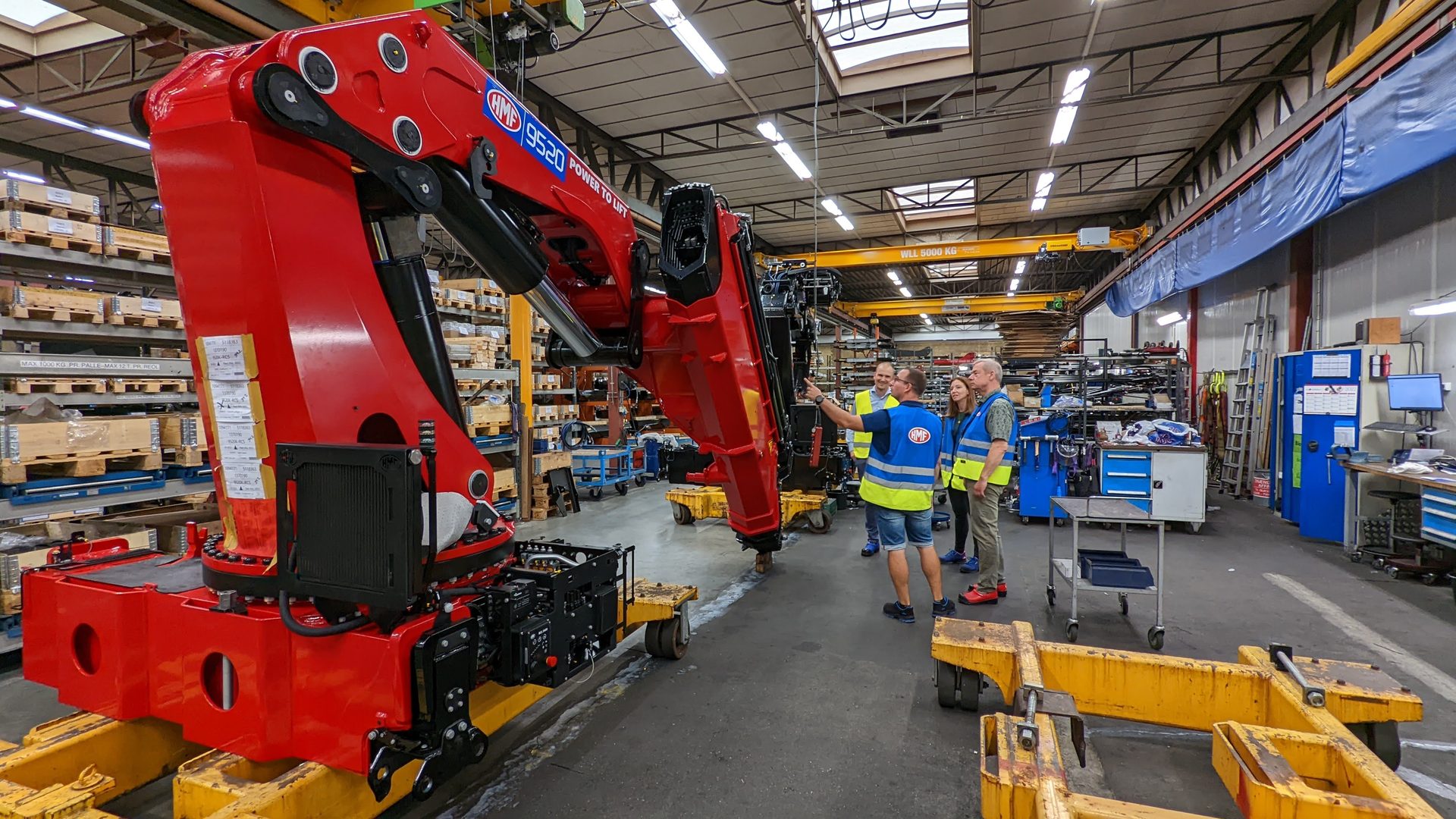
HMF builds truck-mounted loader cranes in Aarhus, Denmark. More than 500 employees, roughly one billion DKK in revenue, and distributors in 35 countries. A crane is a major investment, configured to the truck it is mounted on, the job it has to do, and the rules of the market it is sold into.
The problem: options only an expert could reconcile
When you buy a crane, you make choices, and some choices rule others out. Before CPQ, HMF's distributors had to hold those dependencies in their heads. Sometimes a quote went out for options that were not compatible; in the worst case, for a crane that could not be produced at all. The product knowledge that kept quotes honest lived with a handful of experts in Aarhus.
Why Tacton CPQ
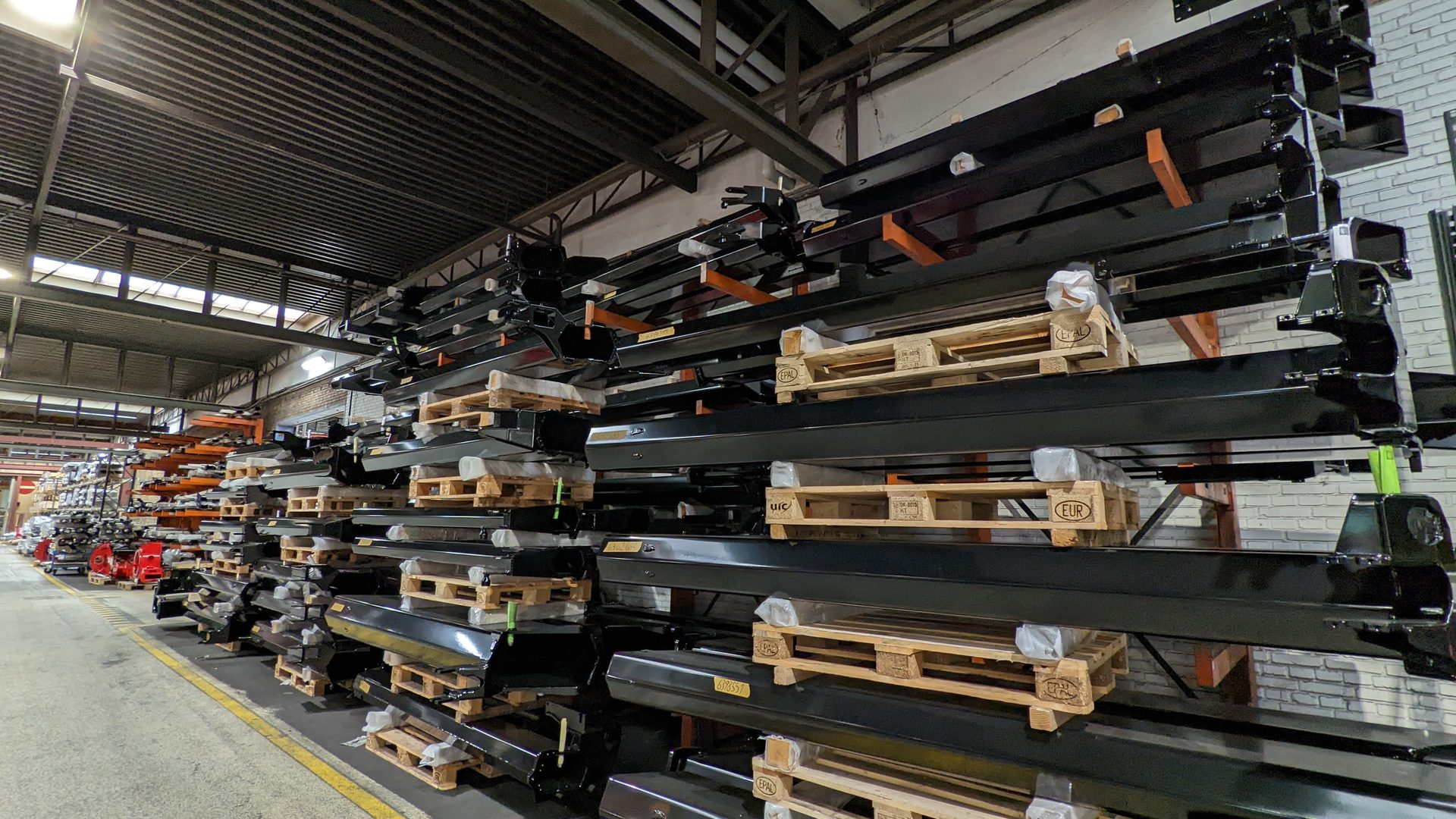
The constraint solver is what HMF singles out. Make an incompatible choice and the system does not just block it; it tells the distributor how to resolve the conflict. That is the constraint-based modelling we describe in our truck manufacturing CPQ guide: encode the physical and regulatory rules once, correctly, so the invalid combination is never offered in the first place. Product knowledge that used to sit in Aarhus now runs in every distributor's browser.
After the first implementation I had no meetings booked, because I expected a lot of calls from our distributors. But nobody called.
The project: delivered entirely remotely
HMF's solution was started, executed and completed during the pandemic. Every workshop, every training session and every go-live milestone was delivered online. The first time the cpq.se team met HMF in person, the system had long been live; they were there to record the customer story. Integration went deep from day one: ERP for consistent order data, and PIM so every quote pulls the right texts, images and illustrations automatically. That is how the same governed model produces correct quote documents in the local language of all 35 markets.
The results: the quote is the contract
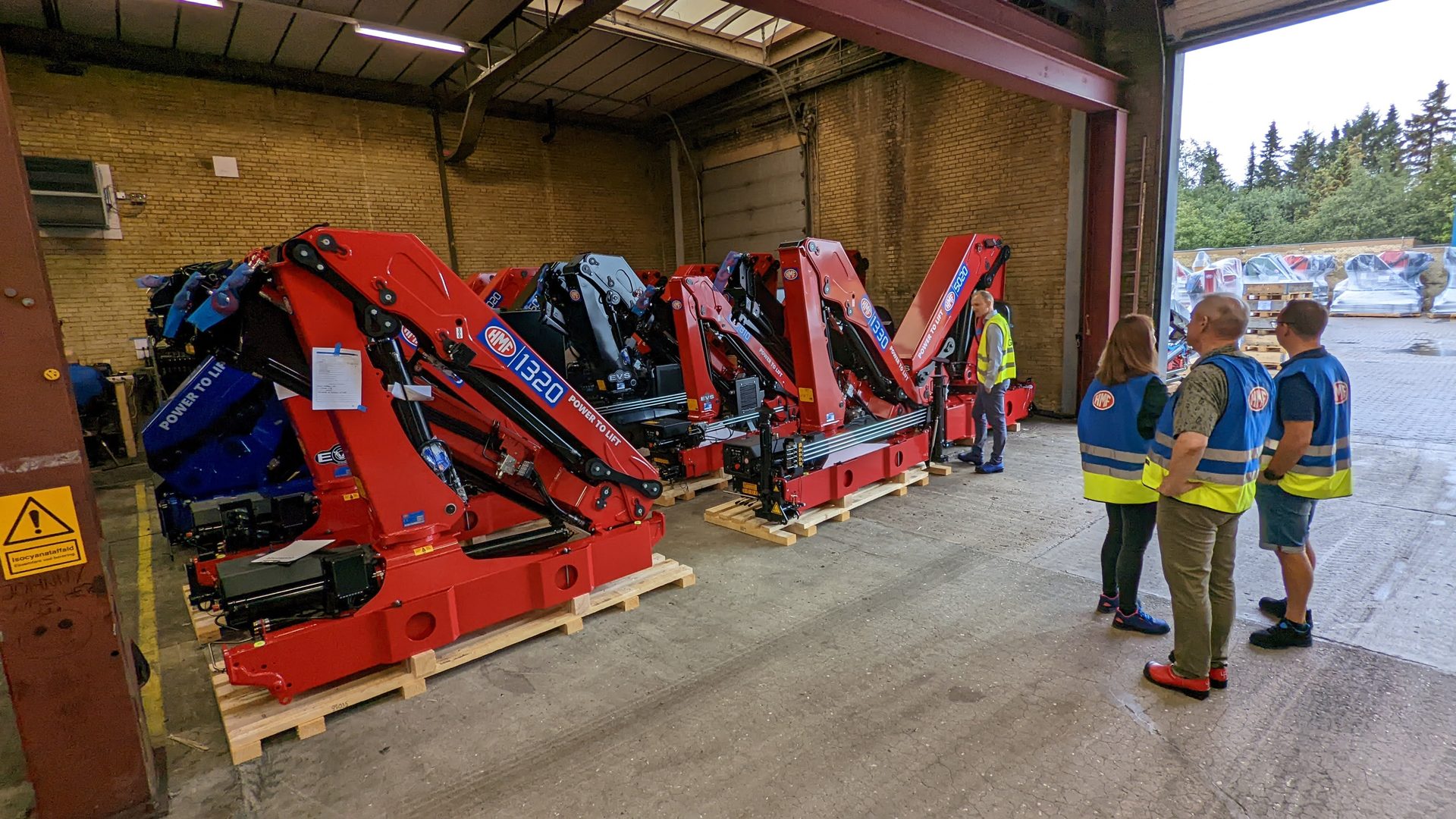
The quote is now the contract, not a draft to be corrected. Orders arrive correct. Sales support braced for a wave of distributor calls after go-live and got silence instead. Pricing stays current because every price lives in CPQ, "especially important," as HMF's Alicia Vivier puts it, "these days when prices are going up and down all the time." New distributor staff configure cranes on their own, without the risk of an error reaching a customer. It is the "sales scale" benefit we describe in what is CPQ: the product knowledge lives in the model, not in one person's head.
What's next
When HMF wants to enter a new market or launch a new product, the configurator is a head start rather than a bottleneck. A new language (Hungarian is next) is a configuration task, not a translation project.
See a related result with real-time 3D visualization in the SWIFT story, or read what a Tacton CPQ implementation typically involves.
Want to feel what a dealer feels? Our mobile CPQ demo configures a different product every day with the same kind of rules HMF's cranes run on, and it works on the phone in your pocket.
Frequently asked questions
The cpq.se team on this project
Designed, delivered and taken live entirely remotely. Every workshop, training session and go-live milestone ran online.



Selling something that can be configured wrong?
A conversation about your product's complexity costs nothing, and needs no prep.
Related stories
A configurable product with billions of combinations; distributors quote it all themselves, with a live drawing.
Two brands, three factories, 30+ machine models in one Tacton CPQ, quoted by internal sales and dealers alike.
The next chapter for HMF: a conversational AI layer on top of the existing CPQ, CRM and PIM, built in six weeks and in internal testing ahead of dealer rollout.
How Bromma uses CPQ analytics for forecasting and supplier planning.